
Got room for some pink, red or purple flowers in your shade garden? Great addition in the Hosta bed
· Very dependable, year after year. Blooms in July/August
· 20” H x 20” W
· Grows best dappled shade for maximum flower production·
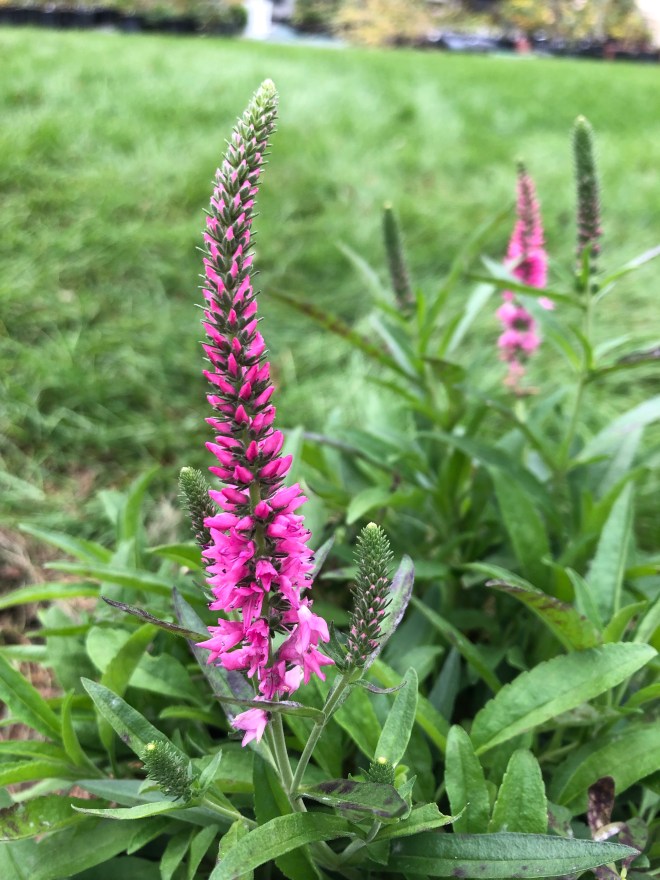
Veronica spicata also known as Speedwell comes in pinks, white and blue. This long blooming flowers is highly valued for its ease of growth and long bloom time (6 to 8 weeks). The spiky flowers are an excellent contrast to the more common rounded flower shapes like Shasta Daisies, Coneflower, and Black Eyed Susans. Expect bees to be buzzing about this plant when in bloom.
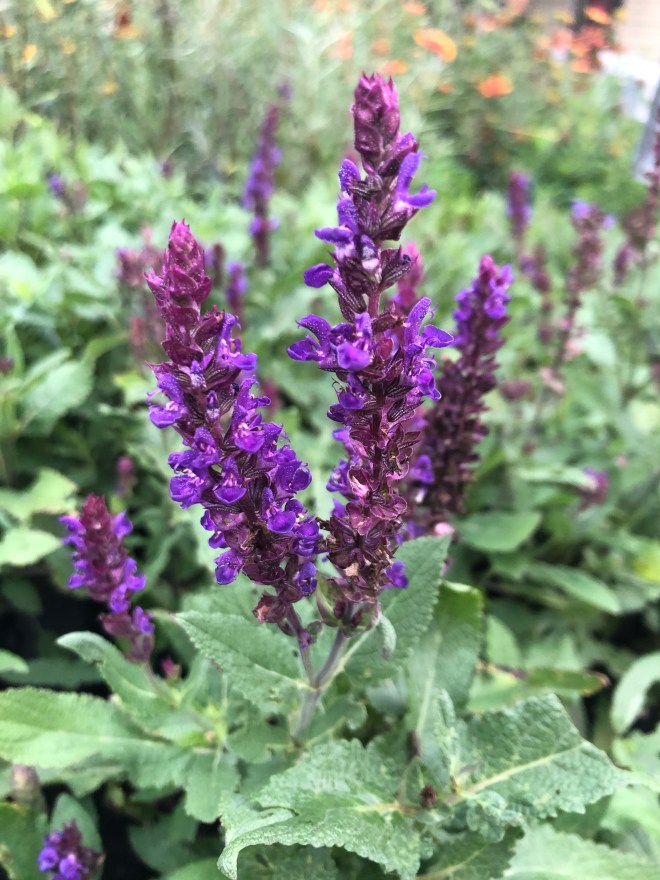
I’ll look good all summer – first showing in June – prune once for a second showing of spikey flowers later in the summer. Pollinators love me.
Likes medium to dry sandy soil –even dry rocky soil will be just fine
Three varieties to choose from: deep violet, blue. or white flowers.
· 12” high x 12” wide and quite deer/rabbit resistant due to scent and hairy texture

Peonies prefer deep well-draining soil in full sun. Needs consistent watering when young than can withstand dry conditions. No fertilizer needed.
Planting depth is absolutely critical for flower performance – 1 ½ “ to 2” below soil line
Types offered click here

Photos courtesy of Walters Gardens, Inc.
Bleeding Hearts with their heart shaped flowers and fern like leaves are an old fashioned favorite for the spring garden. A woodland plant, Bleeding Hearts love the shade and bloom in the cool of spring. This plant has a tendency to die back during the heat of summer, but never fear, it will return next spring when the days are cooler to bring its old fashioned charm to you flower garden once again . They flowers will reach about 3’tall and the mature plant can spread 2′-3′ wide. Colors vary between pink, white and red.

Photos courtesy of Walters Gardens, Inc.
Fall in love with Allium (Ornamental Onions – not for eating) These beauties are Hardy, Easy Care, Deer and Rodent Resistant. They will grow just about anywhere there is sunshine and well draining soil. Very little additional care required -they are happy just doing their thing from year to year. Usually found blooming mid to late summer – they are loved by pollinators. Tall Millennium and shorter cousin Blue Eddie will for sure bring a pop of later season excitement to your landscape.
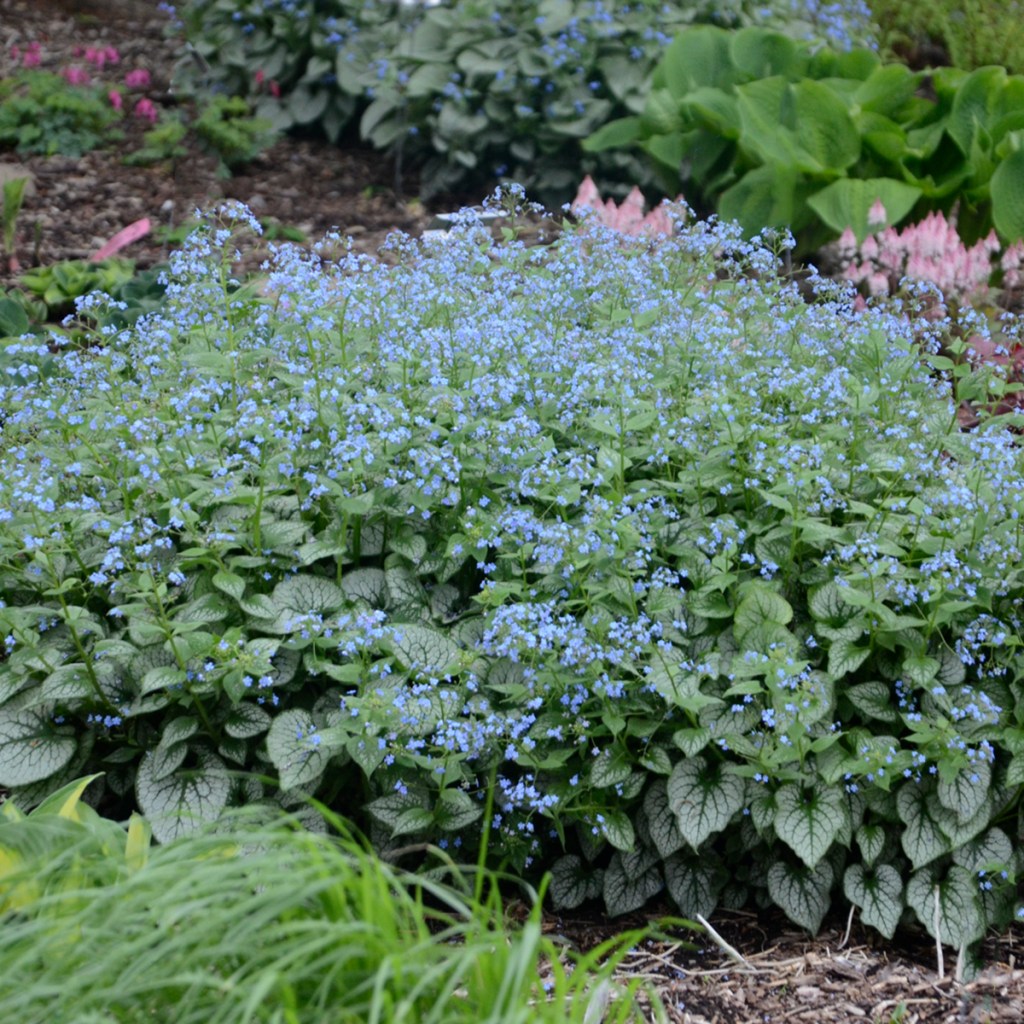
Brunnera, with its heart shaped leave and blue flowers that resemble “forget-me-not’s” , are an excellent addition to the the shade garden. They begin blooming in mid spring – though the tiny blue flower sprays are adorable Brunnera are valued for their mounds of heart shaped deep green or variegated leaves. They blend well with Hosta’s and Astilbe.

Photos courtesy of Walters Gardens, Inc.
Butterfly Weed – host plant for the Monarch Butterfly. If you plant it they will come. This is a perfect addition to your butterfly garden. Bright orange, yellow or red flowers stand on 2′ high stalks. Great for a drier location in the garden. This plant has a very long tap root thus it is very drought resistant. Caterpillars may eat it bare but never fear it will regrow.
Photos courtesy of Walters Gardens, Inc.
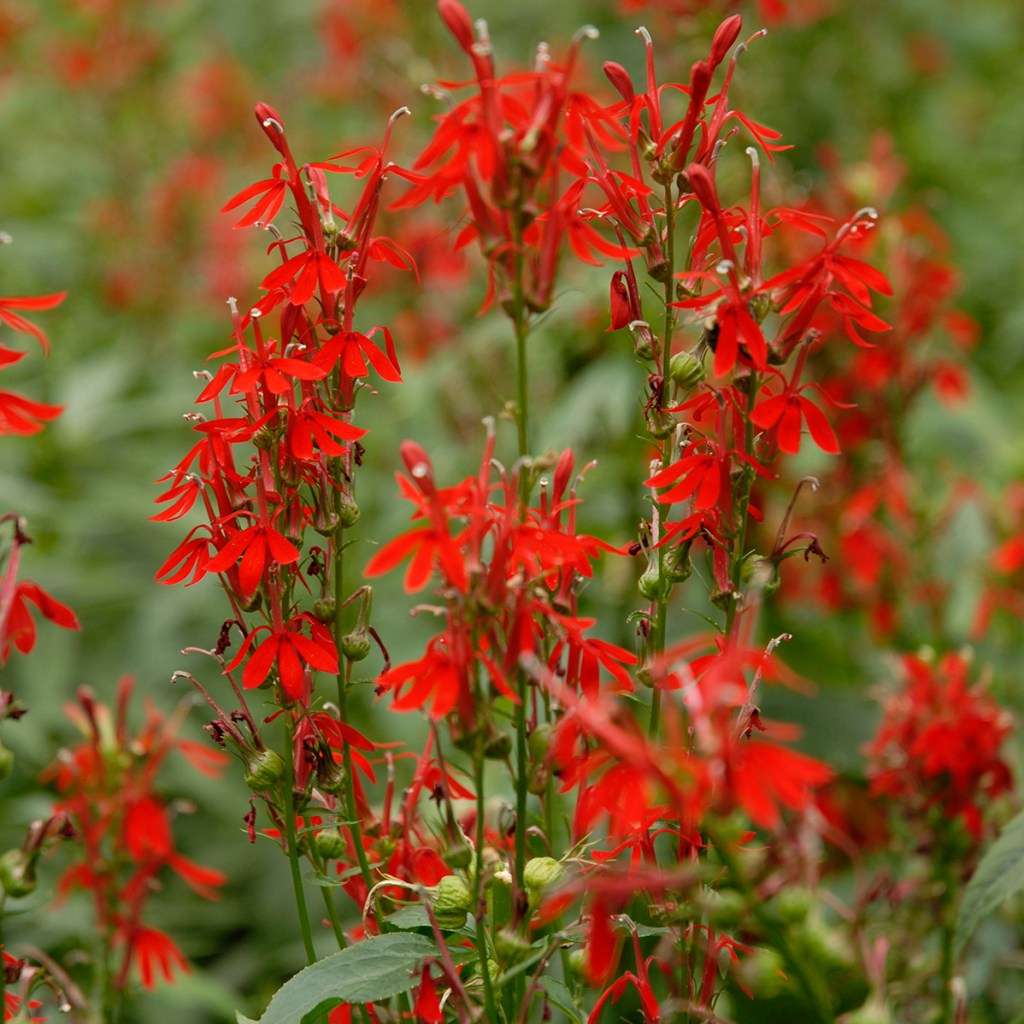
Lobilia cardinalis and Lobilia speciosa – red or blue cardinal flowers (blue) will bring a multitude of pollinators and hummingbirds to your garden. They are American natives that prefers a moist dappled shaded area. Blooming later in the season after the spring flush of flowers has faded. Individual plants are relatively short lived only lasting a few years but will naturalize an area in the right conditions. A must have for the butterflies and hummingbirds.

Photo courtesy of Walters Gardens, Inc.
These are an easy to grow perennial that offers garden interest through much of the growing season. They are especially lovely when allowed to naturalize in shady, woodland borders. They also have excellent potential as cut flowers, lasting up to 2 weeks in a vase.
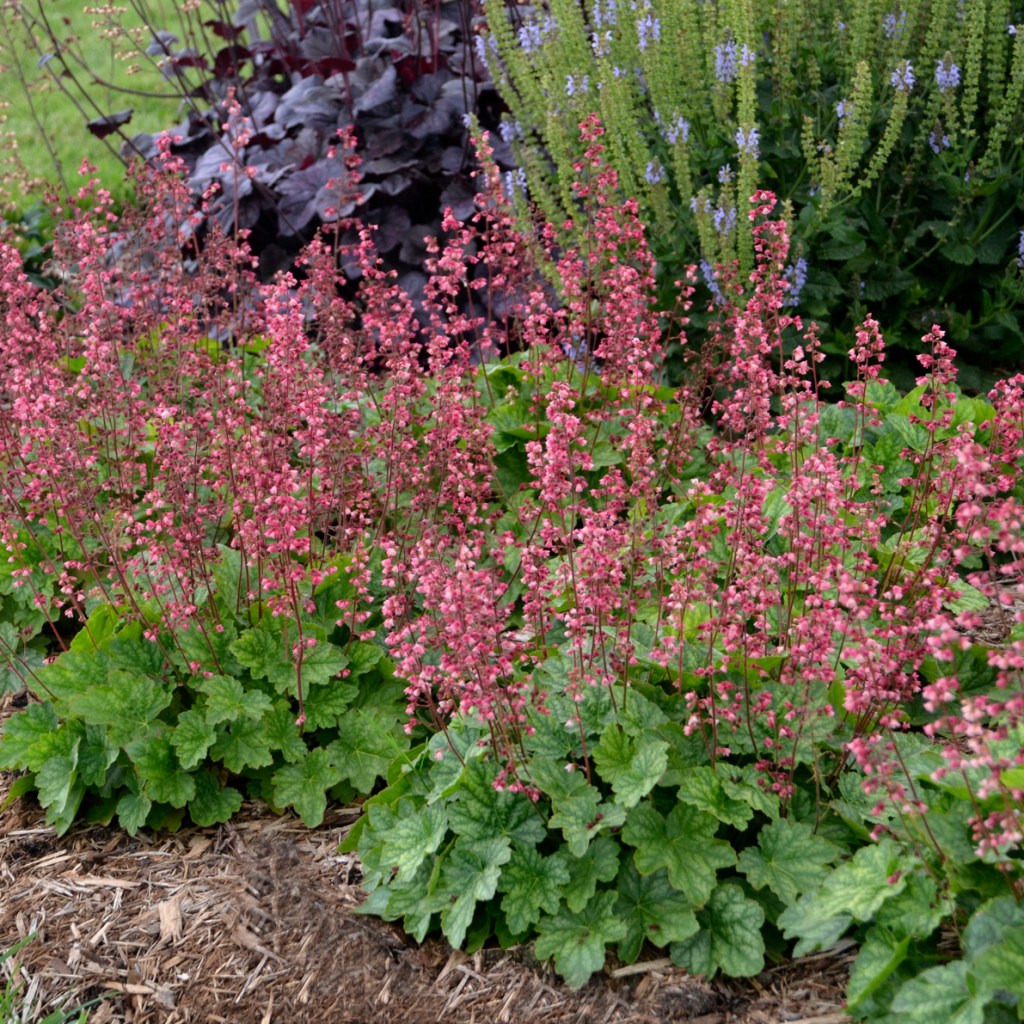
Coral Bell is a versatile perennial that is valued for its variations in foliage color and forms. They do well in both sunny and shady areas. As a general rule the lighter leaves need more protection from the sun than the darker leaves. All need need a certain amount of sun light for best leaf color and flower formation.

Coreopsis – another native – is easy to grow, making it a good choice for beginners. Grow this in a sunny location and one plant will provide you with long-lasting cut flower bouquets all summer long. Loved by pollinators and in the winter the seed heads are a great food source for the birds. There are many varieties great for naturalizing or there are mounding varieties well suited for edging Double flowers, single daisy like flowers, two tone flowers.

Photo courtesy of Walters Garden, Inc.
Oh what fun these will be in the garden. Their unique flower spikes and color variations are an unforgettable sight in the early summer border. At only 20″tall and about 15″ wide there is always a spot for these beauties. Also a sight to behold when planted in mass. They are a biennial so allow some plants to set seed for year after year enjoyment.
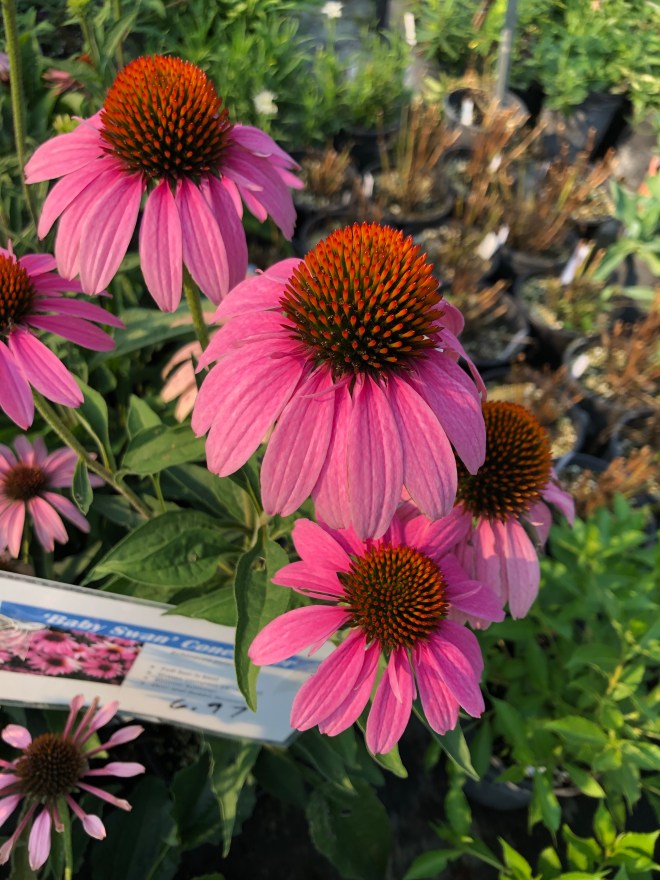
Coneflowers (Echinacea) is a favorite in the garden. It comes in all different shades of pink, orang, yellow, red and purple. The daisy like flowers will attract pollinators and birds for weeks, even months during the summer and fall. There are shorter varieties for the front of the garden and taller varieties for the back. They are super easy to care for as they are fairly drought resistant. Deer are not overly fond of them and they come back year after year. What more could you ask for?
Perennials, Perennials and More Perennials
Ajuga: Catlin Giant, Mahogany, Burgudy Glow
Brunnera: Jack Frost
Dianthus (also known as pinks): Firewitch, Bath’s Pink, Rainbow Loveliness
Gaillardia (Blanket Flower)
Geum (Mrs. Bradshaw)
Heliopsis
Hellebore
Lavander: Mumstead
Liatris: Blue and White
Monarda (Bee Balm): Red and Pink
Nepeta: Pink Cat, Walkers Low
Penstomon
Phlox: (creeping and tall) Pink, Red, Purple,
Potentilla: Pink and Yellow varieties
Rudbeckia (Blackeyed Susans) Cherry Brandy and Goldstrum
Salvia: Maynight, Salvatori Blue, Snowhill
Sedum: Autumn Fire, Autumn Joy, Munstead
Shasta Daisy: Sweet Rebecca
Spiderwort: Ohio
Veronica: Pink Goblin
 STEMS AND SEEDS