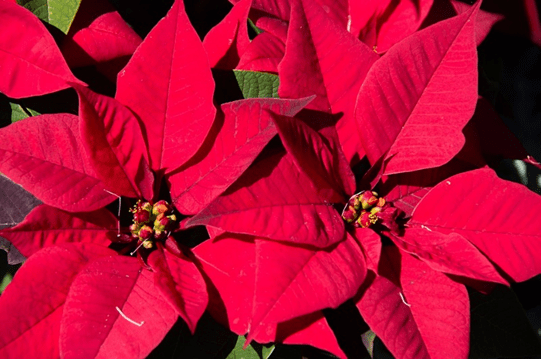
Just the other day I was at the grocery store and the floral department had just received a large shipment of Poinsettias. All the plants had beautiful big red, pink or cream flowers. Each pot had a big bow and foil wrapping around the pot, some of the flowers were even sprinkled with glitter. A very festive moment even in the middle of the hustle and bustle of a grocery store on a Wednesday evening.
However, to be absolutely honest, as beautiful as these traditional Christmas plants are, Poinsettias have never been a favorite of mine. And since I am being honest, it is because they always die on me – to be more accurate I kill them, and it just breaks my heart. Most folks just buy them as live Christmas decorations and throw them away at the end of the season – this breaks my heart too. Yes, I am a crazy plant lady – so I don’t buy them. But if you are game to try and keep one alive for more than a few weeks perhaps some of these tricks will be of help to you.
- Once the season is over place them in the brightest location in your house.
- Water well when the top inch of soil is dry.
- Keep them away from drafts and heater vents.
- In the spring: cut them back to 1/3 or their size and pot in a little larger pot with good potting soil. They would benefit from a little slow release fertilizer
- Place them outside in a bright location protected from extreme sun of the summer and winds.
- In the fall the plant will need to be in complete darkness 12 to 14 hours a day to “force” them to bloom. Use a box or interior room for this purpose.
- If you are lucky you should start to see the leave change color and the little blooms should appear in 8 weeks or so.
Believe me, even though I may not be a Poinsettia fan there are plenty of other flowering Christmas plants that grab my attention. A couple of my favorites are the Christmas Cactus and Amaryllis.
CHRISTMAS CACTUS
I prefer to call them Holiday cactus (Schlumberger sp.) as there are at least three different varieties commonly found as house plants that Mother Nature was kind enough to program to bloom, interestingly enough, right around Thanksgiving (S. truncata), Christmas (S. x buckleyi) and Easter (S. gaertneri). Which one do you have?
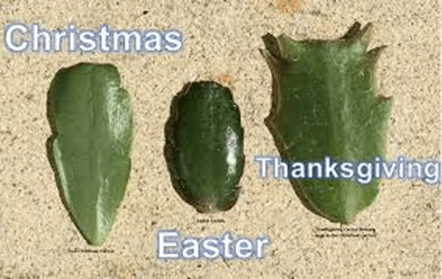
These beautiful plants are not cacti like you find in the sunny dry desert. These babies are actually epiphytic succulents which means they grow “on” other plants or objects merely for support. In nature they are found growing on trees in the rainforests of southern Brazil. As houseplants they do not take too much special care. I like to think mine survives happily on healthy neglect.
- They prefer a bright location but not direct sun.
- A good well-draining cactus mix is required for their feet. They don’t like their toes to be soggy just damp.
- Let the pot dry almost completely in between watering’s, but if it is hot you may need to water thoroughly a couple times a week.
- They should be perfectly happy as a full time house guest.
- Keep out of drafts from the heater or air conditioner.
- In the warm summer months they will happily live in a shady location on your patio..
- They have a drooping growth pattern so put them on a pedestal so their flowers can hang down fully show off their brilliance.
AMARYLLIS

Personally I think Amaryllis make the biggest splash with their very large lily like flowers. They are often sold during the holiday season prepackaged with a pot, soil and a large baseball sized bulb – everything you need for a dramatic bold statement in your holiday decor.
Since I am “that” crazy plant lady I find it super exciting to peruse the holiday selection of flowers pictured on the display box and make my new seasonal selection. Once I get the box home I cannot wait to pop the pot, bulb and potting soil out of the box and plant up my new baby. I think they make pretty good gifts even for the least plant savvy individuals. They are pretty fool proof at least for one season. It is said when well taken care of they can live 75 years. I cannot prove this fact but so far I have bulbs that are somewhere around 5 years old.
A few fun facts:
- Amaryllis means “to sparkle” in Greek.
- The larger the bulb the larger the flowers.
- Seed started plants take upwards of 6 years to mature and produce blooms
- The bulbs also produce “daughter” bulbs that will take 3-5 years to mature
- They can live for 75 years
- There are over 600 named varieties – WOW talk about flower power!
They are considered a soft perennial and can be grown out doors in warm climates that do not get colder than 10º (Zone 8-10) however, here in Illinois (Zone 5) I grow mine in pots.
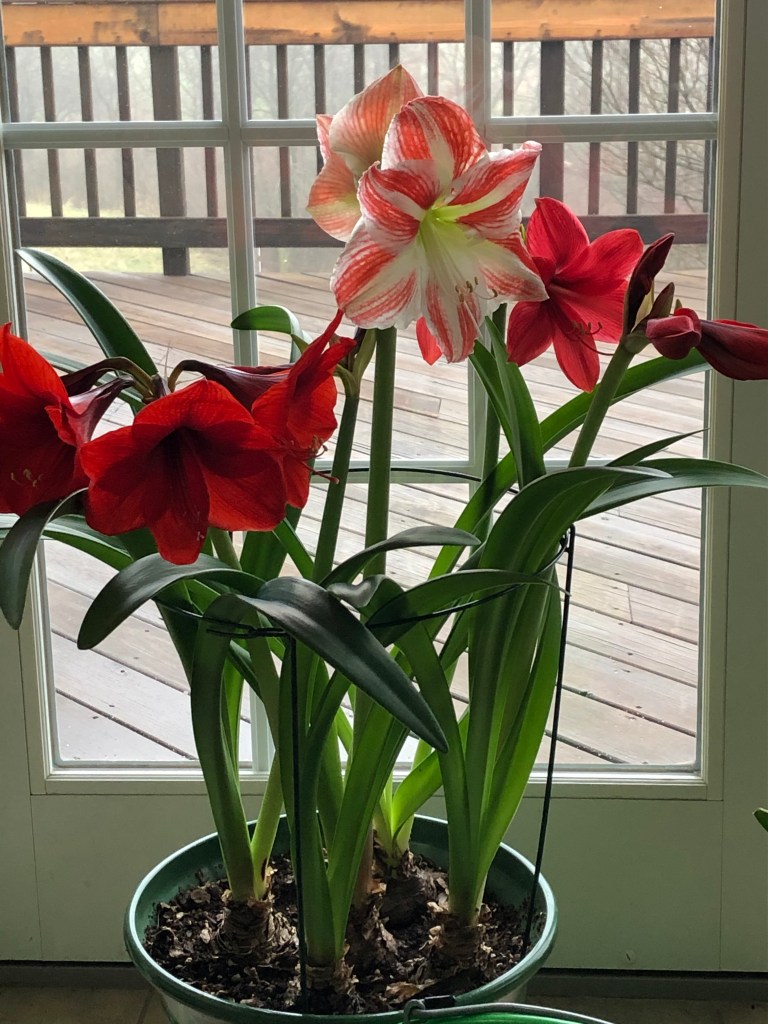
If you want to try your hand at keeping one growing for numerus seasons try these pointers:
- Remove flower stalk after the blooms have faded. Be aware the flower stalk will have water in it when you remove it.
- Place plant in a sunny bright location in your house and take care of it like any other house plant.
- When threat of frost has passed – usually after Mother’s day – find your Amaryllis a nice bright protected place on your porch or patio to spend the summer.
- Water weekly – they will benefit from a slow release fertilizer as well.
- As fall approaches reduce watering and let leave die back naturally.
- Place in a cool dark location for a few weeks.
- In November – repot in fresh soil, water and place in bright location.
- Let the season begin!!
 STEMS AND SEEDS